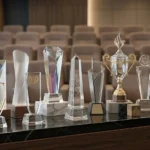
Trophies are more than just awards; they’re symbols of achievement, crafted from materials that reflect the significance of the occasion. The choice of material can impact a trophy’s appearance, durability, and cost. In this guide, we’ll explore the most popular trophy materials crystal, acrylic, wood, and metal to help you choose the perfect one for your event.
Why Trophy Materials Matter
The material of a trophy influences its aesthetic appeal, weight, durability, and price. Whether you’re organizing a sports event, corporate ceremony, or academic competition, understanding these materials ensures you select an award that aligns with your budget and purpose.
1. Crystal Trophies
Crystal trophies are synonymous with elegance and prestige, often used for high-profile awards.
- Appearance: Clear, reflective, and luxurious with a glass-like sparkle. Optical crystal is flawless and ideal for laser etching.
- Durability: Moderately durable but prone to chipping if mishandled.
- Cost: High-end, making them pricier than other materials.
- Common Uses: Corporate awards, gala events, or artistic recognitions.
- Benefits: Premium look, ideal for engraving intricate designs, and conveys sophistication.
- Drawbacks: Heavy, fragile, and expensive.
Example: A crystal obelisk awarded at a corporate leadership event.
2. Acrylic Trophies
Acrylic trophies are versatile, lightweight, and budget-friendly, making them a popular choice for various events.
- Appearance: Clear or colored, with a glossy finish similar to glass but less reflective.
- Durability: Highly durable and resistant to shattering.
- Cost: Affordable, offering a cost-effective alternative to crystal.
- Common Uses: Youth sports, school awards, or custom-designed trophies.
- Benefits: Lightweight, customizable, and available in various shapes and colors.
- Drawbacks: Less luxurious than crystal or metal, may scratch over time.
Example: A colorful acrylic trophy for a youth soccer league.
3. Wood Trophies
Wood trophies offer a warm, traditional aesthetic, often used for plaques or classic designs.
- Appearance: Rich, natural grain with a polished or stained finish.
- Durability: Very durable, though susceptible to moisture damage if not sealed.
- Cost: Moderate, depending on the type of wood and craftsmanship.
- Common Uses: Academic awards, donor recognition, or memorial plaques.
- Benefits: Timeless appeal, eco-friendly options, and ideal for detailed engravings.
- Drawbacks: Heavier than acrylic, limited to flatter or simpler designs.
Example: A wooden plaque honoring a retiring employee.
4. Metal Trophies
Metal trophies are classic and durable, often associated with sports and perpetual awards.
- Appearance: Shiny gold, silver, or bronze finishes, often paired with a base.
- Durability: Extremely durable, resistant to wear and tear.
- Cost: Varies from affordable (e.g., pewter) to premium (e.g., sterling silver).
- Common Uses: Sports championships, perpetual trophies, or high-end corporate awards.
- Benefits: Long-lasting, iconic look, and suitable for engraving.
- Drawbacks: Can be heavy and expensive for high-quality metals.
Example: A gold-toned metal cup for a tennis tournament winner.
How to Choose the Right Trophy Material
- Event Type: Crystal for formal events, acrylic for casual or youth events, wood for traditional settings, and metal for iconic or long-lasting awards.
- Budget: Acrylic is the most cost-effective, while crystal and high-end metals are pricier.
- Customization Needs: Acrylic and crystal allow for creative shapes; wood and metal are great for engravings.
- Display Environment: Consider where the trophy will be displayed crystal and metal for shelves, wood for walls, acrylic for versatile placement.